
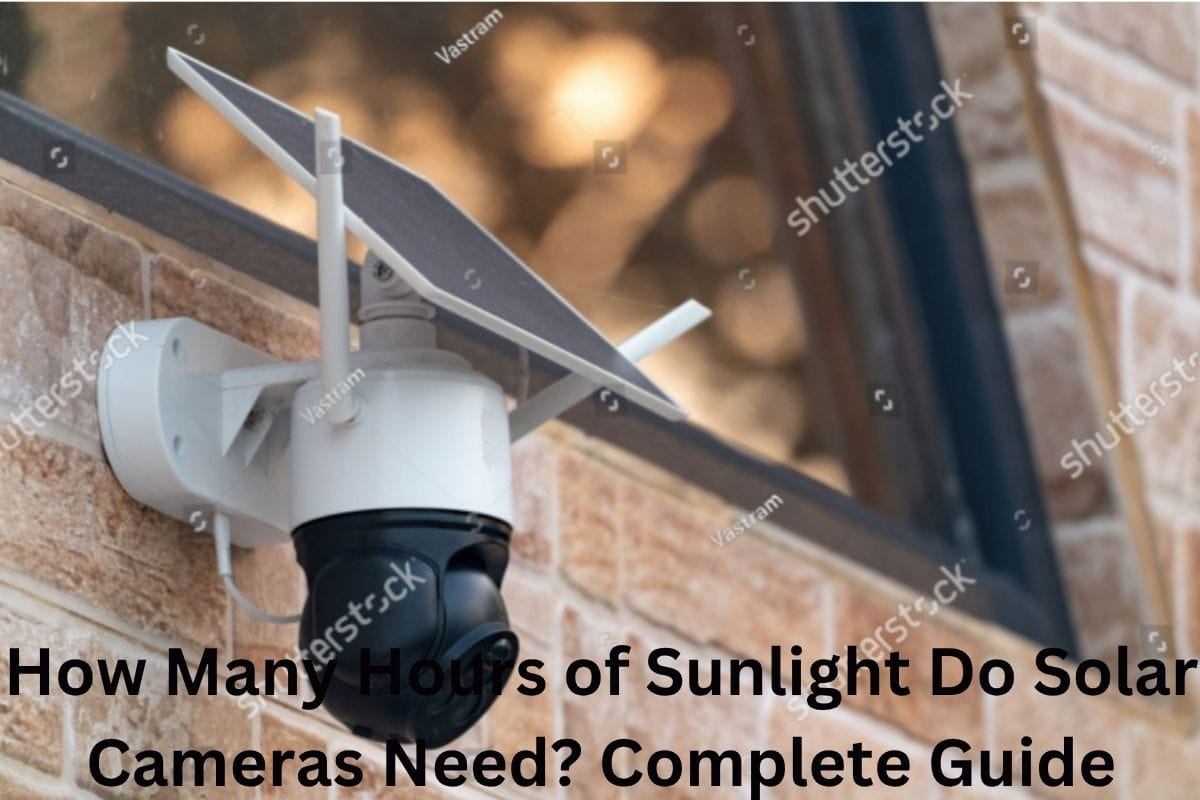
Last Updated on September 27, 2026 by Shakitha
Do you know a convenient way to monitor your property without relying entirely on wired power?
Yes, it is solar security camera.
These solar security cameras’ performance depends entirely on getting enough sunlight to recharge the built-in battery.
So, you should know how many hours of sunlight do solar security cameras need each day.
Generally, most solar cameras benefit from several hours of direct sunlight. But the exact requirement varies by camera, solar panel efficiency, battery capacity, weather, and usage.
First, you should understand the factors which can help you to choose the right location and keep your camera operating reliably.
In this guide, I will explain how much sunlight solar cameras need and how to maximize their charging performance
If you are in the buying mood, you can read my post about top 5 Best cameras operating in solar for cloudy weather
How Many Hours of Sunlight Do Solar Cameras Need?
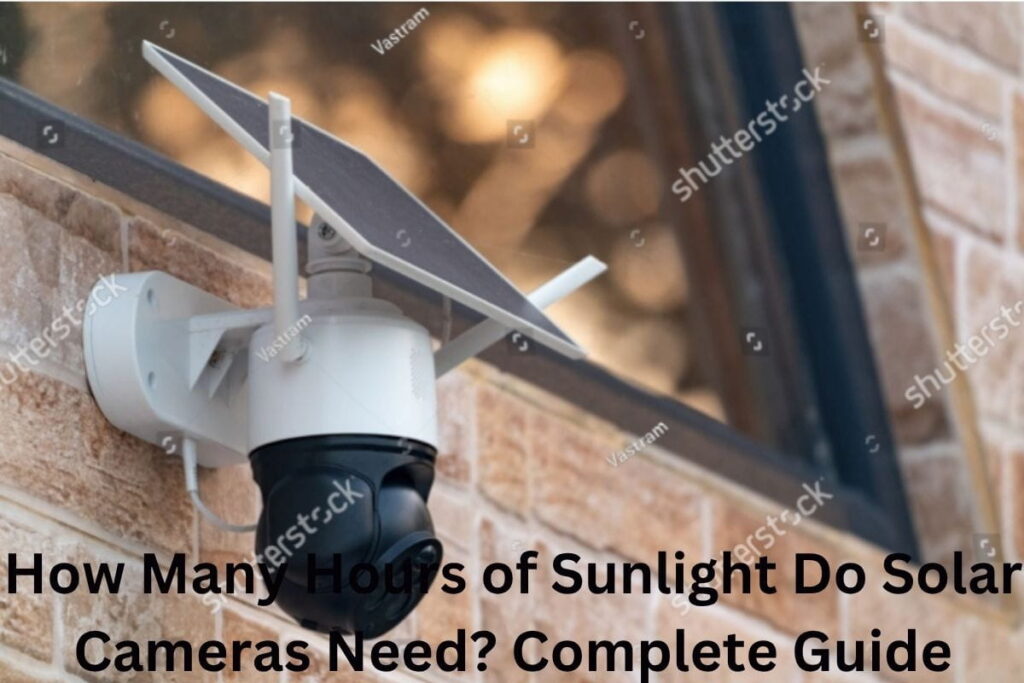
To maintain a reliable battery charge, most of the solar security cameras need several hours of direct sunlight each day.
Generally, with my 10 years of experience, I can say that, 4 to 6 hours of good sunlight per day can provide sufficient energy for many solar camera systems.
But, and also although the exact requirements vary by model, if your camera has an efficient solar panel and large batteries, it can operate with less sunlight.
While the camera with frequent motion detection or continuous recording may need more…
Factors like seasonal changes, cloudy weather, shading, and panel orientation can also affect the charging.
You should always check the manufacturer’s specification, and you should position the solar panel where it can receive maximum direct sunlight throughout the day.
Do Solar Security Cameras Need Direct Sunlight?
When the panel receives direct sunlight, the solar security camera works best. But they can still often generate power under cloudy or indirect light.
If the solar panel receives direct sunlight, it provides stronger solar energy and allows the panel to recharge the camera battery more efficiently.
If your solar panel is placed in a heavy shade under trees or behind structure, the charging can become significantly slower.
If you want a reliable performance, you should install the solar panel in an open location with minimal obstruction and you should position it toward the area receiving the most sunlight.
Even a few hours of strong sunlight can help maintain the battery, but it depends on the camera’s power consumption and solar panel efficiency.
I have written a post about solar cameras vs battery camera which is best, if you need you can read
How Does Sunlight Charge a Solar Security Camera?
A solar security camera has a photovoltaic solar panel. Sunlight charges a solar security camera through this solar panel.
When the sunlight reaches the panel, photovoltaic cells convert solar energy into electrical energy.
Built-in batteries will be recharged through this electricity.
It allows the camera to operate without needing frequent manual charging.
During daylight hours, the panel can provide power while also replenishing energy used by the camera.
Factors like sunlight intensity, panel size, weather condition, and position affect the amount of electricity generated through the solar panel.
If the sunlight is direct, it generally produces the most energy.
During the night period, the camera runs on its stored battery power until the sunlight becomes available again.
What Factors Affect How Much Sunlight a Solar Camera Needs?
- Solar panel efficiency: More efficient panels can generate more electricity from the same amount of sunlight.
- Battery capacity: Larger batteries can store more energy, helping the camera operate through periods of limited sunlight.
- Camera usage: Frequent motion detection, live viewing, recording, and notifications can increase power consumption.
- Weather conditions: Cloudy, rainy, or overcast weather can reduce the amount of solar energy produced.
- Panel positioning: A panel facing the strongest sunlight generally receives more energy throughout the day.
- Shading: Trees, buildings, walls, and roof overhangs can significantly reduce charging efficiency.
- Season: Shorter winter days and weaker sunlight may reduce daily energy production.
- Panel size: Larger solar panels generally have greater potential to generate electricity.
- Camera settings: Higher video quality, night vision, and frequent activity can increase battery usage.
- Installation location: An open, unobstructed location usually provides more consistent sunlight for charging.
How Many Hours of Sunlight Do Solar Cameras Need in Winter?
Generally in winter period, solar security cameras need more available sunlight. Because in winter there will be shorter days, weaker sunlight, cloudy weather and lower temperature.
This can reduce charging efficiency.
As a general guideline, aim for 4 to 6 hours of direct sunlight per day when possible.
Although the exact requirement depends upon your camera and solar panel.
Factors like snow, shade and overcast condition can also further limit the energy production.
You should position the panel where it can receive maximum unobstructed sunlight during the shorter days of the year.
If your panel is larger and has a higher capacity battery, you can get reliable operation when winter sunlight is limited.
Can Solar Security Cameras Charge on Cloudy Days?
The short answer is yes.
The solar security camera can usually charge on cloudy days, but the charging is slower than direct sunlight.
I can say that the solar panels can still produce electricity from the diffuse sunlight that passes through the clouds.
The amount of energy generated is significantly reduced.
Nowadays, modern panels can continue charging the camera battery during overcast conditions, depending on their efficiency and the brightness of the sky.
But several consecutive cloudy days can generally drain the battery, especially when the camera detects frequent motion or records often.
To improve the reliability, you should choose a camera with a larger solar panel and battery, and you should install the panel in an unobstructed location.
Can Solar Cameras Work in Shaded Areas?
In shaded areas, there will be limited sunlight. It can reduce their charging performance, but solar cameras generally work in shaded areas.
These solar panels can still generate some electricity from indirect or filtered light, but heavy shade from trees, walls, roofs, or nearby buildings can significantly reduce the energy production.
If your camera uses more power than the panel can replenish, its battery may gradually lose charge.
For reliable operation, you should install the solar panel in the brightest available location and you should avoid areas that remain shaded for most of the day.
You should choose a camera with a larger solar panel and higher capacity battery, if the shade is unavoidable.
How Should You Position a Solar Camera for Maximum Sunlight?
I have provided the detail below with comparison table for clear understanding,
| Positioning Factor | Recommended Approach | Why It Matters |
|---|---|---|
| Direction | Face the panel toward the strongest available sunlight | Increases daily solar energy production |
| Tilt angle | Angle the panel toward the sun rather than keeping it completely flat | Helps the panel capture more direct sunlight |
| Shade | Avoid trees, buildings, walls, and roof overhangs | Prevents reduced charging efficiency |
| Open area | Choose an unobstructed location | Provides more consistent sunlight |
| Time of day | Check sunlight during morning, midday, and afternoon | Helps identify areas that become shaded later |
| Seasonal sunlight | Consider the sun’s position during winter | Prevents seasonal charging problems |
| Panel orientation | Follow the manufacturer’s recommended direction | Different designs may have specific positioning requirements |
| Camera placement | Keep the camera in the desired surveillance position while positioning the panel for sunlight | Balances security coverage with charging performance |
| Panel angle | Adjust the panel to receive strong direct light | Can improve energy collection |
| Cable positioning | Keep the solar cable secure and avoid unnecessary bends | Helps maintain a clean, reliable installation |
FAQs About How Many Hours of Sunlight Solar Cameras Need
1. How many hours of sunlight do solar security cameras need?
Most solar security cameras benefit from several hours of direct sunlight each day. Around 4–6 hours of good sunlight is a useful general target, but requirements vary by model, panel efficiency, battery capacity, and power consumption.
2. Do solar cameras need direct sunlight to charge?
Direct sunlight provides the best charging performance. However, solar panels can still generate some electricity from indirect or diffuse sunlight on cloudy days.
3. Can a solar camera charge on cloudy days?
Yes. Solar cameras can usually charge in cloudy conditions, but charging will be slower because less solar energy reaches the panel.
4. Can solar security cameras work in shaded areas?
They can operate in shaded areas, but limited sunlight may prevent the solar panel from producing enough energy to maintain the battery. Heavy shade should be avoided whenever possible.
5. What happens if a solar camera does not get enough sunlight?
If the camera consistently receives insufficient sunlight, its battery can gradually lose charge. Eventually, the camera may stop working until the battery is recharged.
6. Does winter affect solar camera charging?
Yes. Shorter daylight hours, weaker sunlight, cloudy weather, and snow can reduce solar charging during winter. Proper panel positioning becomes especially important.
7. How should I position a solar camera for maximum sunlight?
Install the solar panel in an unobstructed location where it receives strong sunlight for as much of the day as possible. Avoid trees, walls, buildings, and other sources of shade.
8. Can solar cameras work with indirect sunlight?
Yes, but indirect sunlight generally produces less energy than direct sunlight. If indirect light is the camera’s primary energy source, charging may not keep up with battery consumption.
9. Does the size of the solar panel affect charging?
Yes. A larger or more efficient solar panel can potentially generate more electricity, helping the camera maintain its battery when sunlight is limited.
10. How can I improve my solar camera’s charging performance?
Keep the solar panel clean, remove obstructions, position it toward strong sunlight, adjust its angle appropriately, and minimize unnecessary camera activity that consumes battery power.