
Last Updated on September 26, 2026 by Shakitha
Low temperatures can reduce battery performance and shorten the time between charges of your security camera.
So choosing the best battery security camera for cold weather can be challenging.
During winter, the camera may lose battery power much faster while that works well in normal weather , especially in freezing conditions.
If you choose the right cold weather security camera, it should offer reliable battery life, a suitable operating temperature range, weather resistance and dependable night vision.
Nowadays, some of the models also support solar charging, which can help extend battery life during winter.
In this post, I will compare the best battery security cameras for cold weather and I will also explain the key features to consider before buying a camera for your home, garage, driveway or outdoor property.
Best Battery Security Camera for Cold Weather: 5 Top Picks
What Is the Best Battery Security Camera for Cold Weather?
If you choose the best battery security camera for cold weather, it should provide reliable performance even when temperatures drop below freezing.
If you have a cold weather, it can reduce battery capacity which causes the camera to run for less time between charges.
For this reason, you should look for a model with a wide operating temperature range, good battery capacity, weather resistance, and efficient power management.
If you choose a good cold weather camera, it should also have a IP65 or higher weather resistance rating to protect against rain, snow, and moisture.
It should have a strong night vision which is an important feature because winter days are shorter and outdoor areas may remain dark for longer periods.
Solar charging is another factor you should look for, it’s especially useful in cold climates because it can reduce the need to remove and recharge the battery frequently.
However, your solar camera performance depends on available sunlight, so it should not be the only power source you rely on during winter.
While choosing a battery security camera for cold weather, you should also consider video resolution, motion detection, WiFi reliability, local storage, cloud storage requirements, and battery replacement options.
The best choice ultimately depends on how cold your area gets and where you plan to install the camera, such as driveway, backyard, garage, or front door.
What Should You Look for in a Battery Security Camera for Cold Weather?
When choosing a battery security camera for cold weather, you should focus on features that help the camera continue working reliably when temperatures fall.
During winter, cold conditions can reduce battery performance, so the camera’s operating temperature range and battery capacity are especially important.
You should look for weather resistance, because the camera may be exposed to snow, rain, ice, or moisture.
You should look for a camera with efficient power management, strong motion detection, and a battery that can be easily recharged or replaced.
You can also go for solar charging because it can be useful in winter, although its effectiveness depends on the amount of available sunlight.
Another feature you should look for is good night vision; it is also important because winter often brings longer periods of darkness.
| Feature | What to Look For | Why It Matters in Cold Weather |
|---|
| Operating Temperature | Wide temperature range | Helps the camera work in freezing conditions |
| Battery Capacity | High-capacity battery | Provides longer runtime between charges |
| Weather Resistance | IP65 or higher | Protects against rain, snow, and moisture |
| Battery Type | Rechargeable or replaceable | Makes winter maintenance easier |
| Solar Charging | Optional solar panel | Can reduce charging frequency |
| Night Vision | IR or color night vision | Improves nighttime monitoring |
| Power Management | Efficient standby mode | Helps conserve battery power |
| Motion Detection | Adjustable sensitivity | Reduces unnecessary recordings |
| Local Storage | microSD or internal storage | Provides an alternative to cloud storage |
| Wi-Fi | Reliable wireless connection | Helps maintain stable video transmission |
If you choose these features together, it can help you find a battery security camera that performs more consistently throughout the winter.
Top 5 Best Battery Security Camera for Cold Weather
Which Battery Security Cameras Work Best Below Freezing?
5 Battery Security Cameras for Cold Weather
| Camera | Operating Temperature | Weather Capability | Power | Cold-Weather Details |
|---|---|---|---|---|
| eufy SoloCam S340 | -4°F to 122°F (-20°C to 50°C) | IP67 | Rechargeable battery + solar | Suitable for freezing temperatures; solar charging can help reduce charging frequency |
| Arlo Pro 5S 2K | -4°F to 113°F (-20°C to 45°C) | Weather resistant | Rechargeable battery | Designed for outdoor use and freezing temperatures |
| Blink Outdoor 4 | -4°F to 113°F (-20°C to 45°C) | Weather resistant | 2 AA lithium batteries | Replaceable lithium batteries are convenient during winter |
| Ring Stick Up Cam Battery | -4°F to 122°F (-20°C to 50°C) | Weather resistant | Rechargeable battery + optional solar | Wide temperature range for outdoor use |
| Wyze Battery Cam Pro | -4°F to 122°F (-20°C to 50°C) | IP65 | Rechargeable battery + optional solar | Designed for outdoor use in freezing conditions |
1. eufy Security SoloCam S340, 3K Dual-Lens Solar Security Camera
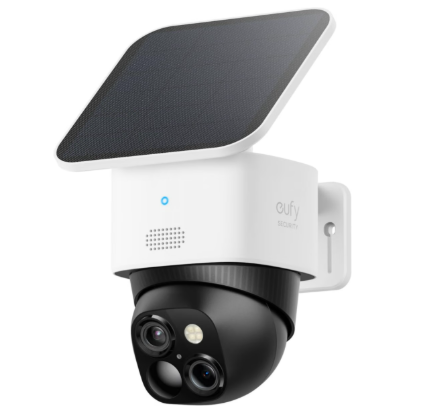
It is a battery-powered outdoor security camera with a 3K dual-camera design, and it has integrated solar charging.
It has a dual-lens system which provides a wider view while allowing detailed monitoring of people and activity around your property.
It can be good for cold weather use. Its wide operating temperature range makes it suitable for many winter environments.
It is built with a solar panel which can help keep the battery charged during daylight.
It reduces the need for frequent manual charging.
With weather protection, automatic tracking, and 360-degree pan and tilt coverage, the SoloCam S340 is designed for monitoring areas such as driveways, entrances, garages, and backyards.
Pros
- 3K dual-camera system provides detailed video and a wider viewing area.
- Integrated solar charging can help extend battery runtime.
- 360° pan-and-tilt coverage helps monitor a larger outdoor area.
- Local storage support can reduce dependence on monthly cloud subscriptions.
- Wide operating-temperature range makes it suitable for many cold-weather environments.
Cons
- Solar charging depends on sunlight, which can be limited during winter.
- Battery performance can decrease in very cold temperatures.
- Some advanced features may require additional eufy equipment or services.
- Pan-and-tilt movement can increase power consumption compared with fixed cameras.
- 3K video and continuous activity can drain the battery faster than lower-power settings.
2. Arlo Pro 5S – Wireless Security Camera 2K HDR – 4 Cameras, White
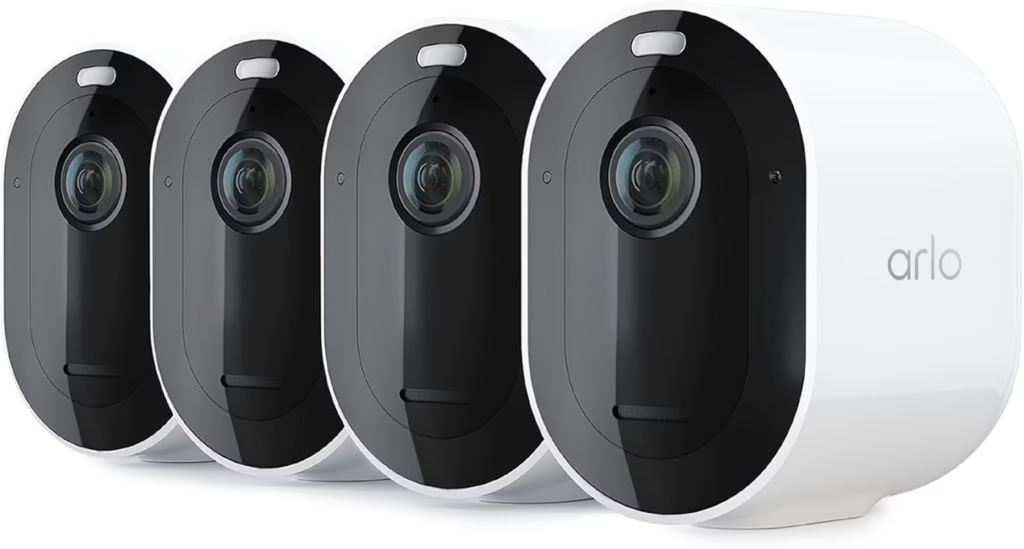
It is a wireless outdoor security camera designed for homeowners who want detailed video without running power cables.
It contains 2K HDR video which can provide clear images in challenging lighting conditions.
This rechargeable battery makes installation flexible and the camera is designed for outdoor environments including colder conditions.
It consists of 4 camera setup which can provide broader coverage for your entrance, backyard and driveways.
Pros
- 2K HDR video provides detailed footage with improved clarity in bright and dark areas.
- Color night vision helps capture more detail after sunset.
- Wire-free rechargeable design makes installation easier without running power cables.
- Weather-resistant construction is suitable for outdoor installation.
- Wide operating-temperature range makes it suitable for many cold-weather environments.
Cons
- Rechargeable batteries can lose capacity in very cold temperatures.
- Frequent motion activity can reduce battery runtime.
- Some advanced features require an Arlo Secure subscription.
- Four-camera kits can have a higher upfront cost than single-camera systems.
- Regular charging may be necessary in winter if the cameras receive frequent motion alerts.
3. Blink Outdoor 4 and Battery Doorbell 2K+ (newest model)
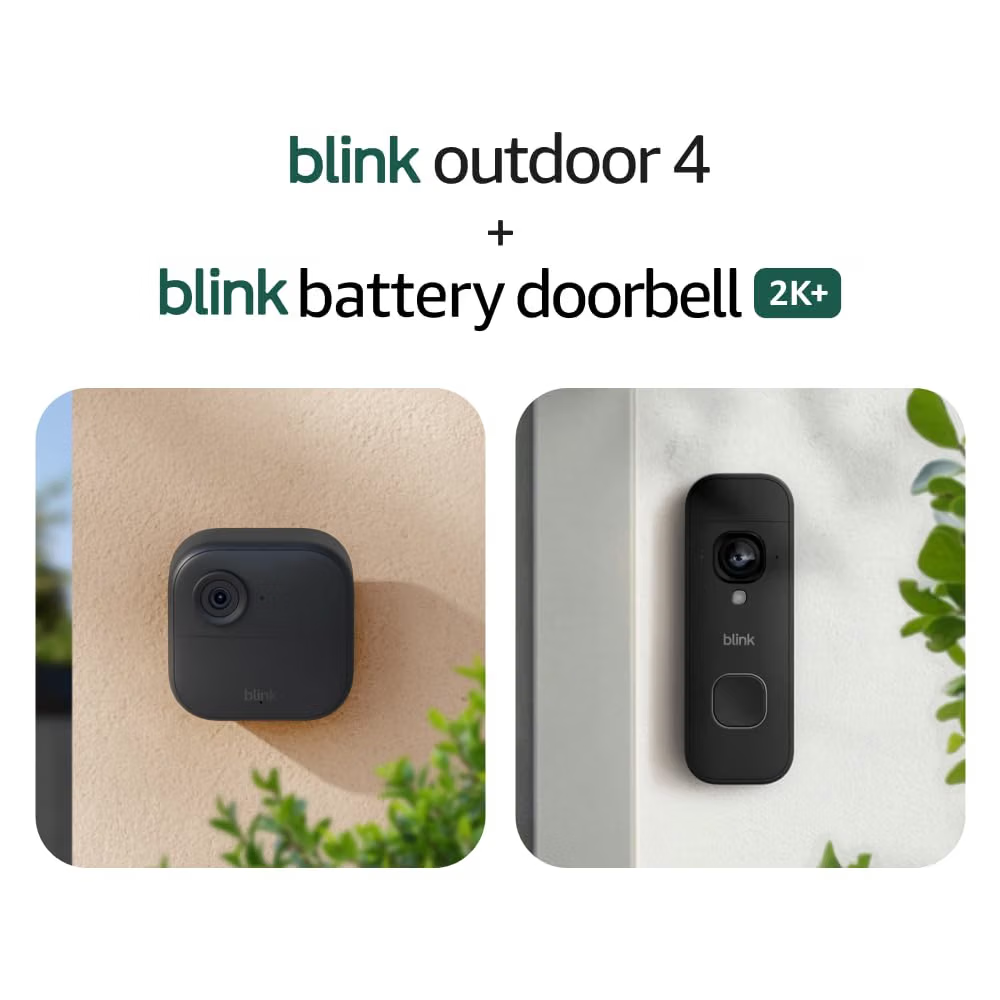
It is a battery-powered outdoor security camera offering 1080p HD video and a 143-degree field of view, two-way audio and up to two years of battery life under default settings.
It comes with AA lithium batteries and it is rated IP65 with an operating temperature range of -4 degrees Fahrenheit to 113 degrees Fahrenheit.
So it is suitable for many cold weather outdoor installations.
It provides 2K video and a 140-degree horizontal field of view, two-way audio and up to two years of battery life.
Pros
- Up to 2 years of battery life with two AA lithium batteries under typical settings.
- IP65 weather resistance for outdoor use.
- Works down to -4°F (-20°C), making it suitable for many freezing conditions.
- 1080p HD video with infrared night vision.
- Easy battery replacement without waiting for the camera to recharge.
Cons
- 1080p resolution is lower than many newer 2K and 4K cameras.
- Battery life can be shorter with frequent motion detection.
- Cloud storage requires a subscription for many recording features.
- Solar charging is not built into the standard camera.
- Very low temperatures can still reduce lithium-battery performance.
4. Ring Outdoor Cam (Stick Up Cam), Weather-Resistant Home or Business HD Security Camera
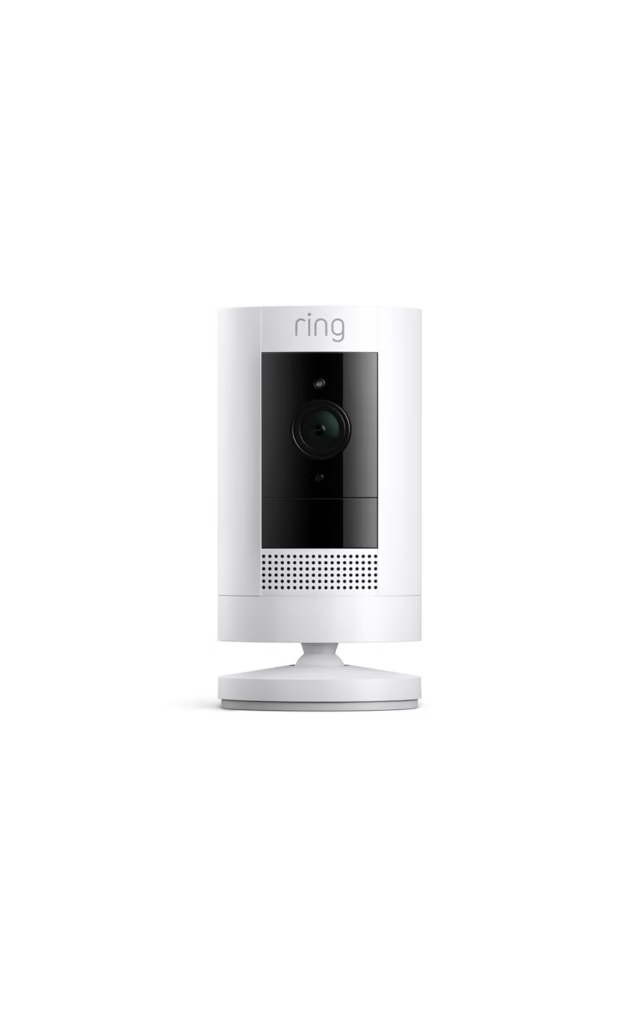
It is also known as Stick Up Cam.
It is a weather-resistant HD security camera designed for monitoring homes and businesses.
Since it is wireless, it makes installation flexible.
The battery-powered version can be installed outdoors without running a power cable.
It is suitable for your backyard, driveway, garages, and entrance.
It is suitable for cold weather application.
The camera is designed for outdoor conditions, but low temperatures can still reduce battery performance.
It also offers solar charging accessories for compatible models. It helps reduce the need for frequent battery charging.
Pros
- Wireless battery-powered design allows flexible outdoor installation.
- Weather-resistant construction is suitable for outdoor areas.
- HD video and night vision provide basic day and nighttime monitoring.
- Two-way talk lets you communicate with people near the camera.
- Alexa and Ring ecosystem integration makes it convenient for existing Ring users.
Cons
- Battery life can decrease in cold weather, especially below freezing.
- HD resolution is lower than many newer 2K and 4K security cameras.
- Frequent motion alerts and live viewing can drain the battery faster.
- Cloud video storage and some advanced features require a subscription.
- Regular charging may be needed if the camera experiences heavy activity.
5 Wyze Battery Cam Pro 2K HDR Wireless Outdoor Indoor Security Camera
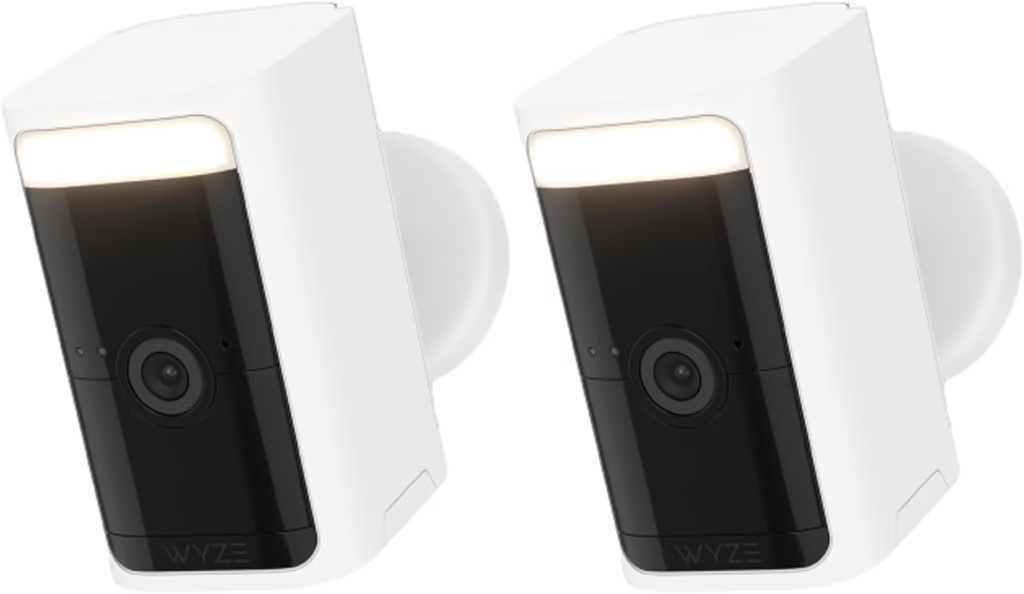
This is a versatile wireless security camera designed for both indoor and outdoor use.
It records in 2K HDR resolution, providing clearer details than standard 1080p cameras.
The rechargeable battery makes installation easier.
The camera is also weather-resistant, making it suitable for outdoor locations exposed to rain and changing temperatures.
Optional solar charging can also help extend battery life.
For cold weather use, remember that low temperatures can reduce battery performance.
Pros
- 2K HDR video provides clear and detailed footage.
- Wireless battery operation makes installation easier.
- Indoor and outdoor use provides flexible placement options.
- Optional solar charging can help extend battery runtime.
- Weather-resistant design makes it suitable for outdoor security.
Cons
- Cold temperatures can reduce battery performance and runtime.
- Frequent motion detection can drain the battery faster.
- Solar charging depends on sufficient sunlight to work effectively.
- Higher video quality can use more battery power than lower-resolution settings.
- Some features may require additional services or equipment, depending on how the camera is configured.
Buying Guide
How Does Cold Weather Affect Security Camera Battery Life?
If your camera is in cold weather conditions, it will be affected.
Cold weather will affect the battery life of a wireless security camera.
If temperatures drop, the chemical reactions inside lithium-ion batteries will slow down.
This can temporarily reduce the battery’s available capacity and cause the camera to shut down sooner than expected.
The colder your environment is, the more noticeable this effect can become.
Cold weather can also affect your battery performance and how the camera is used.
Factors like frequent motion detection, high-resolution video, infrared night vision, and live viewing already consume more power.
During the winter season, these features can place additional demands on a battery that is already operating less effectively.
| Cold-Weather Condition | Effect on Battery | What You Can Do |
|---|
| Below 32°F (0°C) | Battery capacity may decrease | Choose a camera rated for freezing temperatures |
| Very low temperatures | Faster apparent battery drain | Use a larger-capacity battery |
| Frequent motion alerts | Higher power consumption | Adjust motion sensitivity |
| Long nighttime periods | More night vision usage | Reduce unnecessary detection zones |
| Limited winter sunlight | Less solar charging | Keep the solar panel clear and well positioned |
| Snow or ice | Can block solar panels | Clean the panel regularly |
But I have some good news for you.
Many modern outdoor security cameras are designed to operate in cold conditions.
You should always check the manufacturer’s specified operating temperature range before installation because battery performance and camera operating limits can vary between models.
What Is the Best Battery Life for a Cold-Weather Security Camera?
The best battery life for a cold weather security camera depends upon your temperature, recording frequency, video quality and battery capacity.
If you have a mild weather, many of the battery cameras can operate for several months on a single charge.
However, if you have a freezing temperature, it can reduce battery capacity and cause more frequent charging.
If you are using during winter, you should look for a camera that can provide at least three to six months of claimed battery life under suitable usage conditions.
If you have a larger battery, it can be helpful, but advertised battery life should not be treated as a guaranteed run time because manufacturers typically base these figures on specific testing conditions.
| Battery Life | Cold-Weather Suitability | Best For |
|---|
| Less than 1 month | Poor for winter | High-traffic areas |
| 1–3 months | Moderate | Occasional motion activity |
| 3–6 months | Good | Most residential locations |
| 6–12 months | Very good | Low-traffic outdoor areas |
| 12+ months | Excellent on paper | Very low activity or efficient cameras |
If you are facing a cold weather, it can make the battery drain faster, particularly when temperatures remain below freezing for longer periods.
Factors like frequent motion alerts, live viewing, high resolution recording and infrared night vision can also increase the power consumption.
If you are going for a solar charging, it can help extend runtime by topping up the battery during daylight hours.
However, winter clouds, snow, shorter daylight hours and poor panel positioning may reduce solar charging.
If you face very cold climate, you can choose a camera with a wide operating temperature range and you should consider keeping a spare battery available if the model supports battery replacement.
Are Rechargeable or Replaceable Batteries Better for Cold Weather?
I can say that, both rechargeable and replaceable batteries can work well in cold weather, but each has different advantages.
If you are using a rechargeable security camera, it is convenient because you can charge the battery and use it repeatedly.
However, removing the camera or battery for charging can be inconvenient during winter, especially when the camera is mounted high or temperatures are very low.
If you are using a replaceable battery camera, it can be more convenient in extremely cold conditions because you can keep spare lithium batteries indoors and quickly swap a depleted battery.
This also means that the camera does not have to remain offline while the battery is charging.
If your camera has a lithium battery, it generally performs better in cold conditions than many other battery types.
But for lower temperatures, it can still reduce available capacity. You should always check the camera manufacturer’s temperature specification before installation.
For most homeowners, a rechargeable camera with a large battery and optional solar charging can be a practical one.
If your temperature regularly falls well below freezing, a camera with easily replaceable lithium batteries may provide greater convenience because a warm spare battery can be installed when the original battery loses capacity.
| Feature | Rechargeable Battery | Replaceable Battery |
|---|
| Winter convenience | Good | Excellent |
| Battery replacement | Less frequent | Easy with spare batteries |
| Charging | Requires charging | Replace with charged battery |
| Cold-weather maintenance | Moderate | Easier |
| Downtime | Possible during charging | Minimal |
| Long-term cost | Usually lower | Depends on battery cost |
| Best for | Normal winter conditions | Very cold locations |