
Last Updated on September 26, 2026 by Shakitha
You can install battery-powered security cameras almost anywhere without running cables. So, they are more convenient.
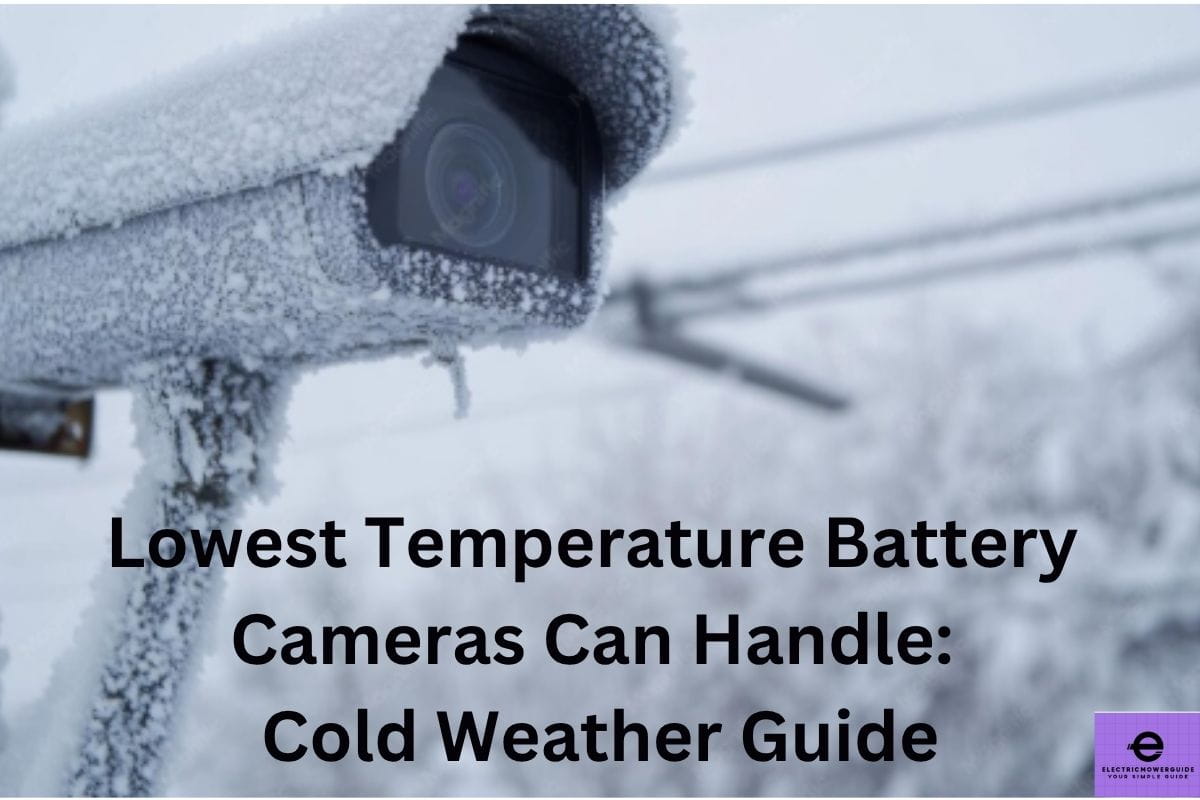
But this cold weather can affect their performance, especially when the temperature drops below freezing.
If you are living in an area with harsh winters, it is a must for you to know the lowest temperature battery cameras can handle before choosing a model to buy.
If your temperature is extremely low, it can reduce battery capacity, shorten run time, and sometimes it causes the cameras to stop working temporarily.
In this post, I will explain typical battery camera temperature ranges, how freezing conditions affect your battery life, and the practical ways for you to protect your security camera during cold weather.
Lowest Temperature Battery Cameras Can Handle
What Is the Lowest Temperature Battery Cameras Can Handle?
Based on the model of your camera, battery type, and manufacturer specification, the lowest temperature a battery security camera can handle differs.
If you take outdoor battery cameras, they are designed to operate around 14 degrees F to 122 degrees F. That is -10 degrees C to 50 degrees C. But, some of the cold weather models can function at a temperature as low as -4 degrees F or lower. That is -20 degrees C.
But, the camera may experience reduced battery performance if the temperature approaches the lower operating limit.
It is important for you to check the manufacturer’s operating temperature rating before installation.
If you are in buying mood, I have written a top 5 Best battery cameras for cold weather, you can read here
You should remember that the camera’s operating range and battery performance range may differ.
If you are living in an area with freezing winters, you should choose a camera specifically designed for cold outdoor conditions.
How Cold Weather Affects Battery Security Cameras
If you are living in a cold weather area, it can significantly affect the performance of your battery security cameras.
If your temperature falls, generally, battery loses some of the ability to hold and deliver the energy efficiently. It can cause a camera to run for a shorter period between charges.
If you are living in an area where extremely the temperature is cold, it may also causes temporary shutdowns or reduce the camera’s ability to respond quickly.
In your camera, if you have features such as night vision, motion detection, Wi-Fi communication and video recording, it can increase power consumption during cold weather.
You should choose a cold weather rated camera to protect it from extreme temperature exposure to improve reliability.
What Temperature Range Do Battery Cameras Typically Support?
Depending upon your camera design and intended use, battery security cameras have different operating temperature range.
Most of the many outdoor models are rated for temperature approximately between 14 degrees F to 122 degrees F. That is -10 degrees C to 50 degrees C.
But some rugged models are designed for colder environments and it can operate at temperature around -4 degrees F or below.
The exact range of temperature varies between the manufacturers and its models. So, you should always check the product specification before purchasing.
It is also important for you to distinguish between operating temperature and storage temperature.
When your camera is stored, then actively operating, it may tolerate colder temperature.
If you want a reliable winter performance, you should select a camera with an operating range suitable for your local climate.
Do Battery Security Cameras Work Below Freezing?
The short answer is yes.
Many battery security cameras can work below freezing provided the temperature remains within the manufacturer’s specified operating range.
But the freezing temperature can reduce your battery performance and may cause the camera to require more frequent charging.
In these types of cameras, lithium ion batteries are commonly used. It can experience reduced capacity in cold conditions. But this does not mean the battery is permanently damaged.
The performance can improve when the temperature return to normal.
The cameras which are installed in areas regularly exposed to freezing temperature should have a suitable cold weather rating.
If you are installing your camera in cold weather conditions, you should check the manufacturer specification for the minimum operating temperature and recommended charging conditions.
How Cold Temperatures Affect Camera Battery Life
Yes, the cold temperature affects the camera’s battery life.
It can shorten the battery life of your wireless security camera.
When the temperature is low, the chemical reaction inside a battery will slow down. It reduces the amount of energy that can be delivered efficiently.
Due to this, a camera that normally operates for several months may require charging more frequently during winter conditions.
Other factors like frequent motion detection, nighttime recording, live viewing, and weak Wi-Fi signal can also increase the energy consumption.
The actual battery life reduction is dependent upon the camera, battery technology, temperature, and your usage pattern.
You should keep your camera protected from extreme cold to maintain adequate air flow. It can help you to reduce unnecessary battery drain during winter.
Which Battery Types Perform Best in Cold Weather?
Below, I have provided the comparison table for easy understanding,
| Battery Type | Cold-Weather Performance | Typical Behavior in Cold | Battery Life in Cold | Suitability for Security Cameras |
|---|---|---|---|---|
| Lithium-ion (Li-ion) | Good | Capacity decreases in freezing temperatures | Moderate reduction | ⭐⭐⭐⭐⭐ Excellent |
| Lithium iron phosphate (LiFePO₄) | Good to very good | Performs well, but charging may require temperature protection | Moderate reduction | ⭐⭐⭐⭐ Very Good |
| Nickel-metal hydride (NiMH) | Moderate | Capacity drops as temperature decreases | Noticeable reduction | ⭐⭐⭐ Average |
| Alkaline | Poor to moderate | Voltage and capacity can fall significantly in cold weather | Significant reduction | ⭐⭐ Limited |
| Lithium primary | Very good | Generally maintains performance better in extreme cold | Smaller reduction | ⭐⭐⭐⭐ Very Good |
| Lead-acid | Moderate | Cold reduces available capacity and increases weight | Noticeable reduction | ⭐⭐ Limited |
The key takeaway is…
If you are using a modern battery-powered security camera, you can use lithium-ion batteries. They are the practical choice which can offer high energy density, compact size, and good overall cold weather performance. But, the camera manufacturers’ minimum operating temperature and charging temperature specifications are more important than the battery chemistry alone.
Important note for you: You should never substitute a different battery chemistry unless the camera manufacturer specifically states that it is compatible.
Can Extremely Cold Weather Damage a Security Camera Battery?
Yes, the extremely cold weather can affect a security camera battery.
It affects temporarily performance loss, but it does not necessarily mean permanent damage.
If you are in a low-temperature region, it can reduce battery capacity and voltage output. It causes shorter run time or temporary camera shutdown.
If you charge your battery while the temperature is extremely cold, it can also be problematic, depending upon your battery chemistry and camera design.
Nowadays, some of the devices include temperature protection, which prevents charging outside a safe range.
If you expose your battery repeatedly to extreme temperature, it may contribute to faster battery aging over time.
You should always follow the manufacturers charging and temperature recommendations.
A quick note for you is, if possible, you can allow a cold battery to return to an appropriate temperature before charging.
How to Protect Battery Security Cameras in Winter
- Choose a cold-weather-rated camera with a minimum operating temperature below your area’s expected winter temperatures.
- Install the camera under an eave or covered area to reduce direct exposure to snow, rain, and freezing wind.
- Keep snow and ice off the camera lens to maintain clear video quality.
- Protect the battery from extreme cold by following the manufacturer’s installation and storage recommendations.
- Fully charge the battery before severe cold weather, if recommended by the manufacturer.
- Avoid charging extremely cold batteries unless the camera specifically supports charging at those temperatures.
- Reduce unnecessary live streaming because frequent streaming can drain the battery faster in cold weather.
- Optimize motion detection settings to reduce unnecessary recordings and battery consumption.
- Maintain a strong Wi-Fi connection because poor connectivity can increase power consumption.
- Clean solar panels regularly if your camera uses solar charging, especially after snow or ice accumulation.
- Check the camera regularly during winter for moisture, ice, snow, or other signs of weather exposure.
- Follow the manufacturer’s temperature and charging guidelines to avoid battery damage and maintain reliable operation.
How to Improve Battery Camera Performance in Freezing Temperatures
You should, Choose a camera designed for cold weather with a suitable minimum operating temperature.
You must, Install the camera in a sheltered location, such as beneath an eave, to reduce exposure to wind, snow, and ice.
You can, Keep the battery adequately charged before periods of freezing weather.
You should, Avoid charging a very cold battery unless the manufacturer confirms that it is safe to do so.
You can, Reduce unnecessary live streaming because continuous viewing consumes significant battery power.
You must, Optimize motion detection settings to prevent excessive recordings and alerts.
You should, Maintain a strong Wi-Fi connection to reduce additional power consumption caused by poor connectivity.
You must, Clean snow and ice from the camera and solar panel regularly.
Use a compatible solar charging panel if available to help maintain battery levels during winter.
Reduce unnecessary camera features that consume additional power when appropriate.
Check the battery level more frequently during particularly cold periods.
Follow the manufacturer’s temperature, charging, and storage recommendations for the best winter performance.
FAQs About Battery Cameras in Freezing Temperatures
1. What is the lowest temperature a battery security camera can handle?
The minimum temperature varies by model. Many outdoor battery cameras can operate around 14°F (-10°C), while some cold-weather models can handle temperatures as low as -4°F (-20°C) or lower. Always check the manufacturer’s specifications.
2. Does cold weather reduce battery camera life?
Yes. Freezing temperatures can temporarily reduce battery capacity and cause the camera battery to drain faster than it normally would.
3. Can battery security cameras work below 32°F (0°C)?
Yes, many battery security cameras can operate below freezing as long as the temperature remains within their rated operating range.
4. Should I charge a battery security camera in freezing temperatures?
Not necessarily. Some batteries should not be charged when they are extremely cold. Check the manufacturer’s charging-temperature recommendations before charging.
5. How can I protect my battery camera during winter?
Install the camera in a sheltered location, keep snow and ice away from the device, maintain adequate battery charge, optimize power-consuming settings, and follow the manufacturer’s cold-weather recommendations.