
Introduction
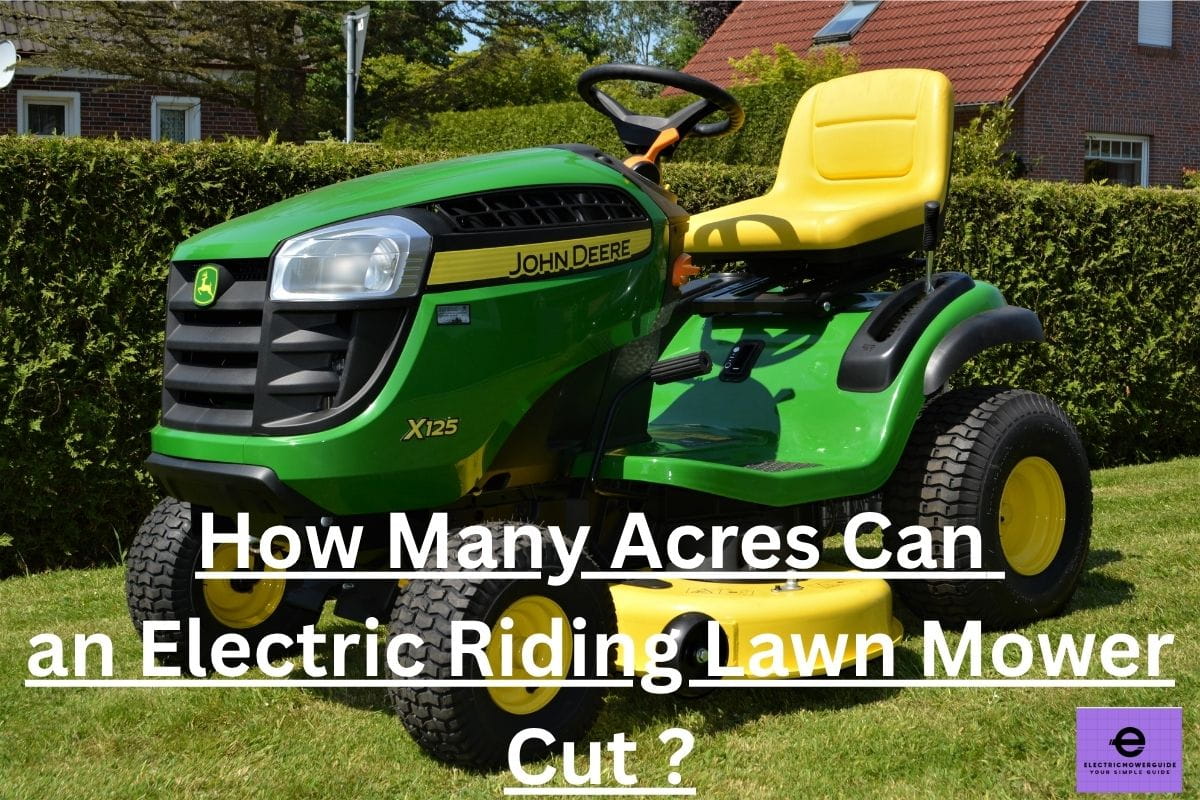
Thinking about ditching the gas can for an electric riding mower? The biggest question is always, How Many Acres Can an Electric Riding Lawn Mower Cut ?
I’ve spent years tinkering with both old-school gas guzzlers and the newer electric models. Honestly, the tech has leveled up fast. They’re quiet enough that you won’t wake the neighbors, and they’ve got way more kick than people give them credit for.
That said, “how many acres” isn’t a simple one-size-fits-all answer. It usually comes down to a mix of battery juice, how hilly your yard is, and how thick the grass gets before you finally decide to cut it.
How Many Acres Can an Electric Riding Lawn Mower Cut?
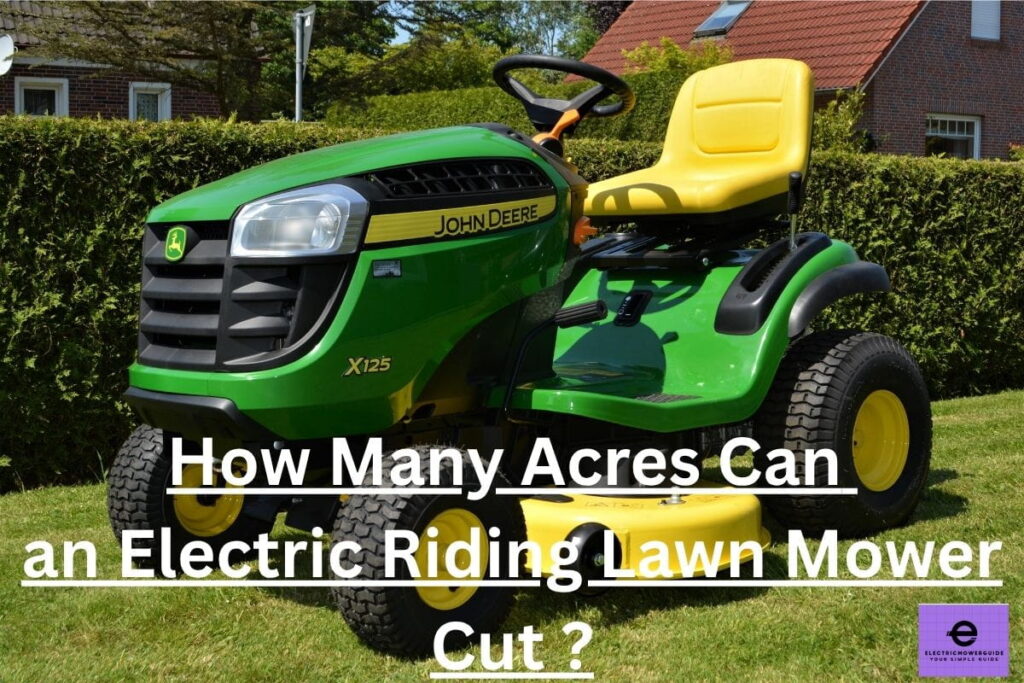
On average, an electric riding lawn mower can cut 1 to 3 acres per charge.
However, this isn’t a fixed number. In my experience using electric mowers on different properties, the actual coverage varies based on:
The Battery “Tank”: It’s all about the Amp-hours (Ah) and Volts. A bigger battery is basically a bigger gas tank; the more juice you start with, the more ground you cover.
Deck Size: A wider cutting deck (like a 54-inch) cuts more grass in one pass, but it also takes more power to spin those bigger blades.
The “Jungle” Factor: If you’re mowing every five days, you’ll breeze through it. If you wait two weeks and the grass is thick or damp, the motor has to work overtime, which eats your battery alive.
Hills vs. Flat Land: Gravity is a beast. If your yard is a series of slopes and hills, the drive motor is going to drain much faster than if you’re cruising on a flat lot.
Your Lead Foot: If you’re racing to get finished and running the blades at max speed, you’re going to run out of juice a lot sooner than if you take a steady, “eco-mode” pace.
Here’s a realistic estimate based on mower type:
- Entry-level models: 1 – 1.5 acres per charge
- Mid-range models: 1.5 – 2.5 acres
- High-end models: 2.5 – 3+ acres
If you have a property larger than 3 acres, you may need either a second battery, a fast recharge, or a more powerful commercial-grade model.
Key Factors That Affect Cutting Capacity
1. Battery Capacity
The battery is really the heart and soul of the whole machine, and they definitely aren’t all built the same. If you’re trying to figure out if an electric mower can actually finish your yard, you have to look at two things: Voltage and Capacity.
Think of it like this:
- Voltage (48V, 56V, 80V) is the “Muscle”: Higher voltage usually means the mower has more raw power to spin those blades through thick, tall grass without bogging down.
- Capacity (Ah) is the “Gas Tank”: The more Amp-hours (Ah) you have, the longer you can stay out there before the “low battery” light starts flashing.
In my experience, if you get a mower with a solid, high-capacity setup, you can easily get 1.5 to 2 hours of solid runtime.
On a standard yard under normal conditions, that’s usually plenty of time to knock out about 2 acres without having to stop and wait for a recharge.
Just keep in mind, if you’re pushing the mower to its limit in “Turbo” mode or tackling a massive hill, that 2-hour window is going to shrink pretty fast.
2. Cutting Deck Size
The cutting deck is really about how much ground you can cover in a single pass. If you pick a deck that’s too small, you’ll be out there all day making extra laps.
In my experience, here’s the real-world breakdown for deck sizes:
- 30–38 inches: These are perfect if you’ve got a smaller yard (under an acre) with tight corners or a standard garden gate to squeeze through.
- 42–48 inches: This is the “sweet spot” for most people. If you have a medium-sized lawn—around 1 to 2 acres—this size gets the job done without feeling like overkill.
- 50+ inches: If you’re looking at a massive property, you’re going to want the big guns. These wider decks are built to knock out large stretches of grass fast.
Just remember, a wider deck saves you a ton of time, but it takes more juice to keep those bigger blades spinning.
It’s a bit of a balancing act between finishing the job quickly and making sure your battery actually lasts until the end.
3. Terrain and Lawn Conditions
If you’ve got a perfectly flat, manicured lawn, you’re golden. But the second you throw in some hills or rough patches, the rules change.
In my experience, “real-world” terrain is the ultimate battery killer. Here is what actually happens when you take the mower off the flat stuff:
- The Hill Climb: Gravity is no joke. Every time you’re heading up a slope, the motor has to pull the weight of the mower (and you) uphill. That extra strain drains the battery way faster than cruising on level ground.
- The “Jungle” Effect: If you’re trying to tackle thick, tall, or worst of all—slightly damp grass, the blades have to work overtime just to keep spinning. I’ve noticed that even a little bit of morning dew or an overgrown patch can tank your coverage by as much as 25%.
- The Bumpy Road: If your ground is uneven or full of ruts, you naturally end up slowing down to keep the cut even (and to keep yourself from bouncing off the seat). The longer it takes you to navigate those bumps, the more “on-time” you’re ticking away on the battery.
Essentially, if your yard looks more like a cross-country course than a golf green, you’ll want to size up your battery just to be safe.
4. Driving Speed
Most electric riding mowers allow you to adjust speed.
- Higher speed = faster coverage but more battery drain
- Lower speed = better efficiency
For maximum acreage, I usually recommend maintaining a moderate speed instead of going full throttle.
Real-World Performance: What to Expect
Let me give you a practical example.
In my own use, with a mid-range electric riding mower:
- Battery: 56V lithium-ion
- Deck size: 42 inches
- Terrain: Mostly flat
I was able to cut around 1.8 acres on a single charge comfortably. But when the grass was thicker than usual, it dropped closer to 1.5 acres.
This is why manufacturer claims can sometimes feel optimistic—they test under ideal conditions.
If you have a plan to buy the best electric riding mower models, I have written a post, go thru it
Pros and Cons of Electric Riding Lawn Mowers
Pros
- Eco-friendly: No emissions
- Quiet operation: Much less noise than gas mowers
- Low maintenance: No oil changes or spark plugs
- Instant start: No pull cords
Cons
- Limited runtime: Battery life restricts acreage
- Charging time: Can take 4–12 hours depending on the model
- Higher upfront cost
- Battery replacement cost over time
Tips to Maximize Acreage Per Charge
Over the years, I’ve learned a few tricks to get the most out of an electric mower:
Keep Your Blades Sharp
Dull blades make the motor work harder, draining the battery faster.
Mow Regularly
Don’t let grass grow too tall. Shorter grass is easier to cut and saves energy.
Avoid Wet Grass
Wet grass adds resistance and reduces efficiency.
Use Eco Mode (If Available)
Many modern mowers have energy-saving modes that extend runtime.
Plan Your Mowing Path
Efficient mowing patterns reduce unnecessary turns and overlap.
Is an Electric Riding Mower Right for Your Property?
Best for:
- Lawns under 3 acres
- Homeowners who want low maintenance
- Noise-sensitive neighborhoods
- Eco-conscious users
Not ideal for:
- Large properties over 4 acres
- Heavy-duty commercial use (unless high-end model)
- Extremely hilly terrain
If your lawn is around 1–2 acres, I can confidently say an electric riding mower is more than enough.
Buyer Tips: Choosing the Right Electric Riding Mower
If you’re planning to buy one, here’s what I recommend focusing on:
Battery Runtime
Look for models that clearly state runtime in minutes or acres.
Charging Time
Faster charging can be a game-changer if you have a larger lawn.
Deck Size
Match the deck size to your lawn size for efficiency.
Build Quality
Go for durable frames and reliable brands with good warranties.
Extra Features
Some useful add-ons include:
- LED headlights
- USB charging ports
- Cruise control
- App connectivity
Maintenance Advice for Better Performance
The best part about going electric is that you can finally say goodbye to oil changes, spark plugs, and air filters. But don’t let that fool you—these machines aren’t totally “set it and forget it.” They still need a little love to keep them running strong.
If you want your mower (and especially that expensive battery) to last, here’s what I’ve found actually matters:
- Keep the Deck Clean: After every mow, take a look underneath. If grass clippings cake up under there, it messes with the airflow and makes the motor work way harder than it needs to. A quick scrape or spray makes a huge difference.
- Baby the Battery: This is the big one. Store your batteries somewhere cool and dry—extreme heat or freezing garage temps are their worst enemies.
- Smart Charging: Most modern chargers are pretty “smart,” but I still try to avoid leaving them plugged in for weeks on end. Charge it up, then pull the plug once it’s ready to go.
- The Basics Still Apply: Even though there’s no engine, you’ve still got tires that need air and blades that need sharpening. Dull blades don’t just look bad; they actually drain your battery faster because they “tear” the grass instead of slicing it.
In my experience, if you stay on top of these few things, you’ll notice the mower stays efficient and that battery life doesn’t start dipping after just a season or two.
Conclusion
So, how many acres can an electric riding lawn mower cut? In most cases, you can expect 1 to 3 acres per charge, depending on the model and conditions.
If you have a small to medium-sized lawn, an electric riding mower is a fantastic investment. It’s quiet, easy to maintain, and environmentally friendly. However, for larger properties, you’ll need to plan around battery limitations or consider higher-end models.
In my professional opinion, electric riding mowers are no longer “just an alternative”—they’re becoming the smart choice for modern homeowners.
FAQ
1. Can an electric riding mower handle 2 acres?
Yes, most mid-range electric riding mowers can comfortably handle 2 acres on a single charge under normal conditions.
2. How long does the battery last on an electric riding mower?
Typically, battery runtime ranges from 1 to 2 hours, depending on usage and terrain.
3. Can I mow more than 3 acres with an electric mower?
Yes, but you may need to recharge the battery or use a spare battery to complete the job.
4. Do electric riding mowers lose power over time?
Battery performance can decline over years, but proper maintenance helps extend its lifespan.
5. Are electric riding mowers powerful enough for thick grass?
Yes, modern models are quite powerful, but thick or wet grass can reduce efficiency and runtime.